
 The Balearic Government plans to raise 120 million euros annually with the increase in the tourist tax, which will double, from 2018, its average amount to 3 euros per person per day, so that its Price will fluctuate between 1 and 4 euros, and will also be paid by cruise passengers since they step on Balearic soil.
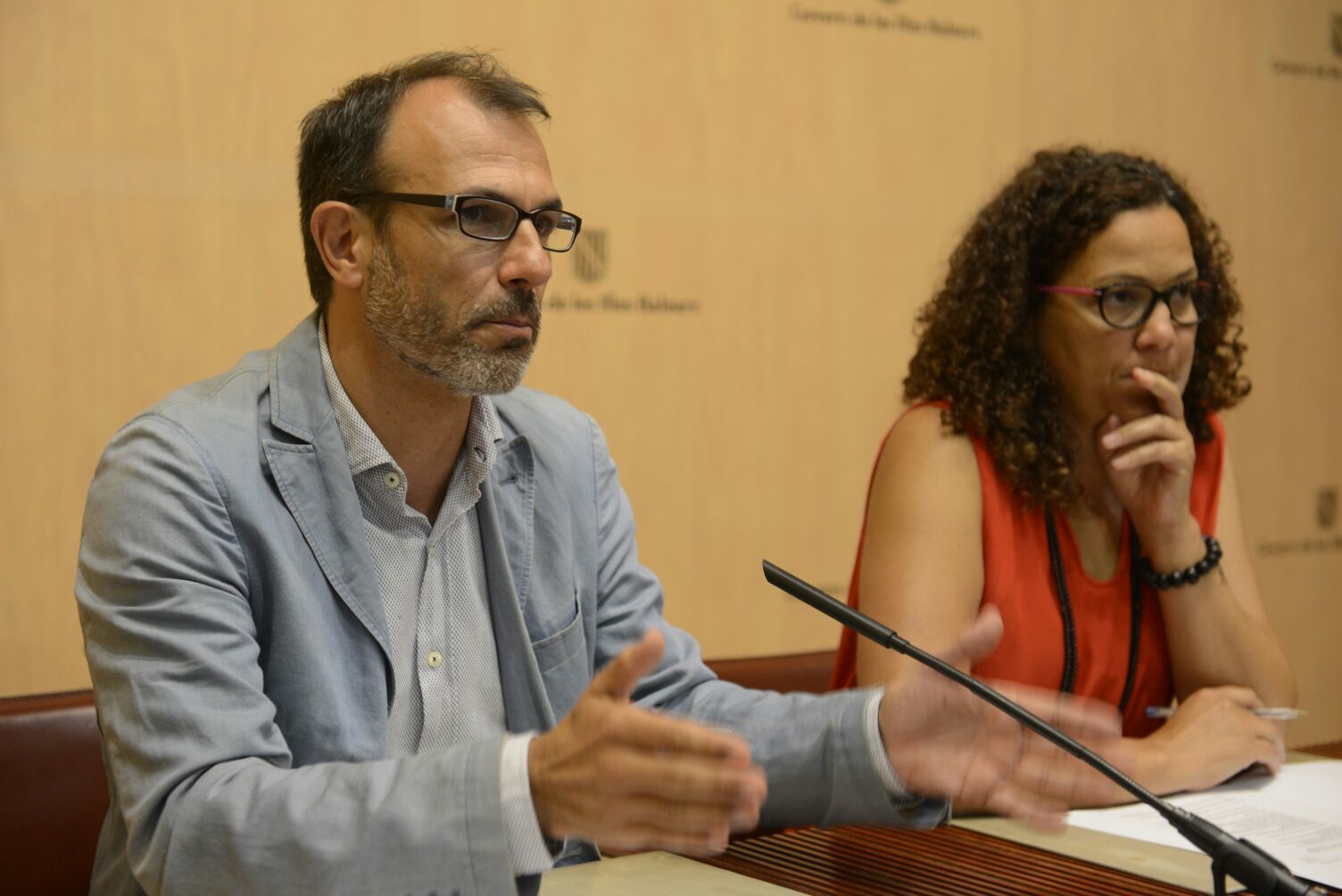
The vice president and Minister of Innovation, Research and Tourism, Biel Barceló, and the Minister of Finance and Public Administrations, Catalina Cladera, have informed at a press conference of this agreement of the increase of the tourist tax to which they have arrived with the rest of parliamentary groups that support the Government.
The vice president has provided a series of data confirming that the ecotax has not meant a decrease in the visits and spending of tourists in the islands, and has indicated that its application “is absolutely normalized”.
The Minister has reported that to make these increases effective, the law of the tourist tax that will be included in the regional budget of 2018 must be modified.
Both have insisted that this increase is justified since it has had great “social acceptance” and its collection serves to reverse the impact that the arrival of visitors has on the territory due to the current tourist pressure.
The tax plans to collect from its application and until this year 100 million euros, which will increase to 120 with the increase next year. Only for the income of the cruise passengers, who until now only paid if they were more than 12 hours on the islands, 1.8 million euros will be entered.
The bonuses in Low season will be maintained to encourage seasonalization, as well as for children under 16, in order to promote family tourism, Barceló has detailed.
It folds in all establishments
Specifically, from next year the amount of the ecotax doubles in all establishments.
Tourists staying in hotels, city hotels and five-star apartment hotels, five stars great luxury and four upper stars will pay 4 euros per day of stay or fraction; in those of four stars and three stars superior, 3 euros; and in those of one, two and three stars, they will cancel 2 euros.
In the tourist apartments of four keys and four upper keys must be paid 4 euros per day; in those of three upper keys, 3 euros; and in those of one, two and three keys, 2 euros.
The establishments of non-residential accommodations of residential tourist companies will pay 4 euros per day.
The holiday tourist properties, the object of marketing of tourist stays and those of tourist marketing will pay 2 euros per person per day.
The rural hotels, agroTourisms, and Accommodations of Inland Tourism, 2 euros; the hostels, hostels residence, pensions, inns and guesthouses, campsites of Tourism and campsites, 1 euros; as well as hostels and shelters.
Two euros will pay per day those who stay in other establishments or properties of a tourist nature, and cruise passengers.
Barceló has said that he does not understand the opposition of hoteliers and several sectors to the increase in the tax, since its implementation has not meant a fall in demand, since, on the contrary, these have increased, as the statistics confirm.
He has also indicated that the tax is a tool used by dozens of tourist destinations, while he has defended that even with the increase the cost is still below the average of other cities such as Florence (5 euros), and Brussels (8).
The increase in the tax serves to meet what tourism means for the islands, which supports an average of 16 visitors per inhabitant, he stressed.
He also recalled that the occupation has not stopped growing in recent years, as indicated by the comparative data of May since 2015 (61.6), 2016 (69.5) and 2017 (70.2).
The same has happened with the average expenditure per tourist that, from January to May of this year, has increased by 7.8compared to the same period of the previous year.
Barceló also stressed that the hotel prices have risen in Balearic Islands by up to 10annually, despite the ecotax.
For his part, Cladera has emphasized the “important role” that the tourist tax has had in “the redistribution of wealth and social justice”.
“After seeing the good acceptance we believe that it is appropriate to review the rates and it is proven that it does not affect neither demand nor competitiveness,” said Cladera, who has given as an example that now a family with two minor children will pay between 4 and 6 per day in a stay in High season .
He has insisted on the finalist character of the tax, so it will not be included in the spending ceiling of the regional budgets of 2018 that is planned to be approved tomorrow in the Consell de Govern.
Political reactions
The parliamentary groups of PP, Citizens and El Pi have been opposed to the increase in the sustainable tourist tax agreed on Thursday and have described the rise as “improvised”. The president of the Balearic PP, Biel Company, has accused the Government of Tourismphobia.
On the contrary, Podemos, Més per Mallorca and PSIB have transferred their “satisfaction” with the increase, since “although it has no deterrent effects it allows to act on the negative impacts of Tourism in the Islands”, as explained by the co-spokesman of MÉS, David Abril.
Citizens spokesman Xavier Pericay explained that his party is against the increase and the tax itself because it has an impact on the business fabric of the Islands. He also criticized that today the investment that has been made with the money raised is not clear.
Likewise, the spokesman of El PI, Jaume Font, has described as “precipitous and risky” the increase of the sustainable Tourism tax and has warned that “the Tourism is being endangered, which feeds us.”